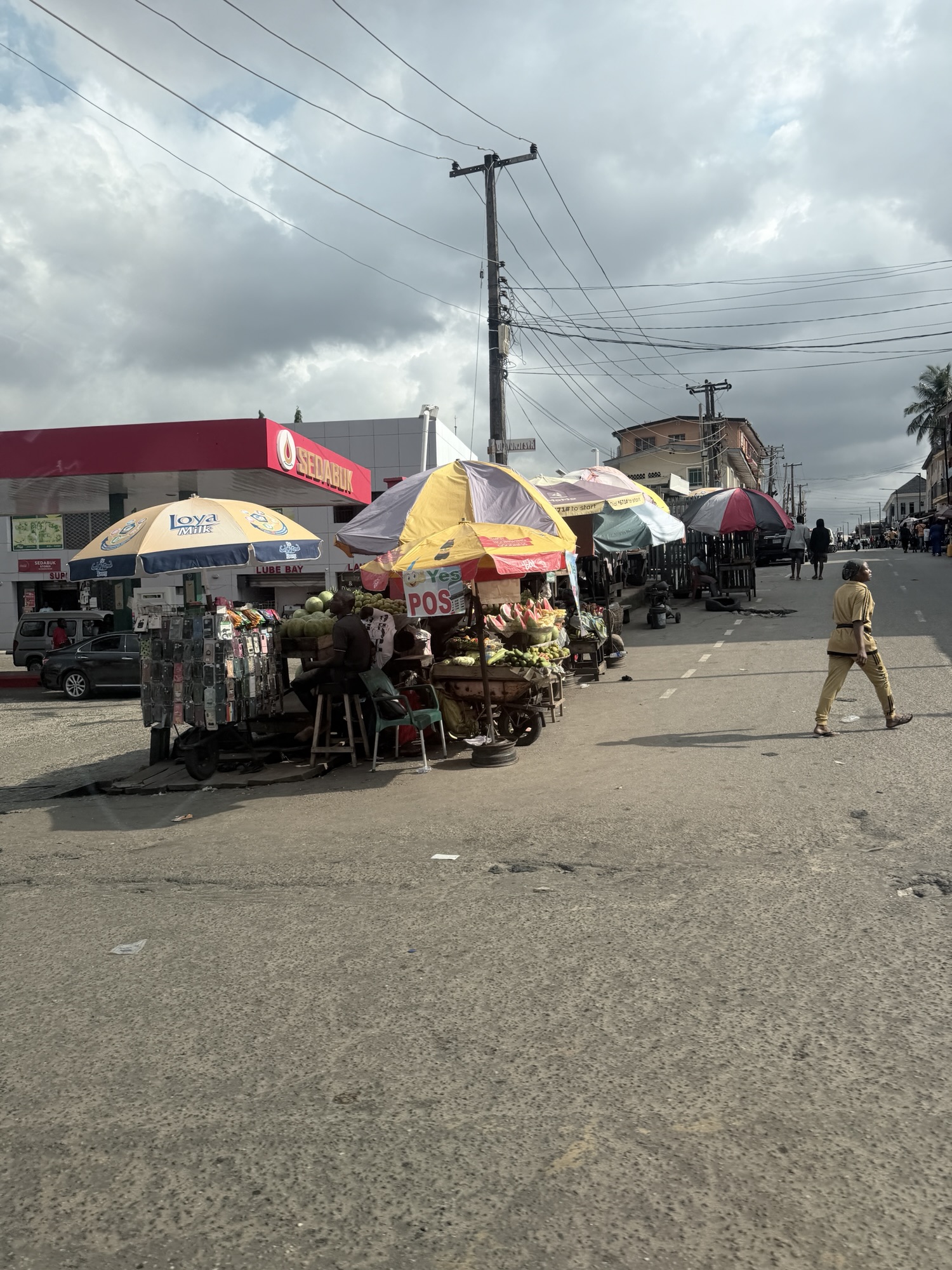
A day with my children, a trillion-dollar question, and the stars hiding inside Africa’s storm-worn streets.
My children and I spent the whole day on one question. Africa’s one-trillion-dollar question. The one we keep walking past.
The informal entrepreneurs.
The market women. The fruit sellers. The corn roasters. The street-food corners that feed a city at dusk. The point-of-sale money movers who turn a plastic chair and a small machine into a bank. Every enterprise lined along our streets, unlisted and uncounted, holding the economy up with two hands and a prayer.
We drove past them all day. And we watched.

The truth comes knocking, but we keep the door shut
There is an old wisdom I keep close. If we take one thing to be true and cling to it, then even when the truth comes and knocks at our door, we will not open it. We already decided. We already knew.
So it is with the informal sector.
We say they are unbanked, and we stop there. But hear me. You could carry the most brilliant bank ever built straight to their table, and many would still remain unbanked. Not because they cannot. Because the thing they need was never a bank at all. We just never opened the door long enough to ask.
For anything to reveal itself to us, we have to set down what we think we already know. We have to keep the light on and wait for the knock.
So we asked a different question
Riding through the streets, surrounded by young people — my own children — I stopped asking what is wrong with them and started asking what might help them thrive.
Not survive. Thrive. In the least-developed economies, in the heat and the crowd and the noise, among the very entrepreneurs the world of AI is not building for, not scaling for, not even seeing.
The next generation of innovation is not coming later. It is needed now. And it turns out the children in the back seat had already imagined it.
What the children saw that the market missed
An umbrella that does more than shade. Most of this sector sells under scorching sun or sudden downpour, sheltered by umbrellas that have gone unchanged for a generation. My child imagined an umbrella with technology woven in — protection reengineered for people who live their whole workday inside the storm.
Energy that simply flows. Another imagined seamless power. Energy to run a transaction. Energy to make the thing they sell. No stuttering, no waiting, no going dark mid-sale.
A better place to stand. One imagined moving them — gently, deliberately — to locations where footfall and dignity meet.
Income beyond the one they have. And the last imagined new streams of earning, so that a single storm, a single bad season, cannot wash a family’s whole livelihood away.
Fresh eyes. Fresh insight. A reminder that we must keep innovating for people no matter the sector they belong to.
Keep the sector, and it keeps us
Africa’s informal economy is a gem. It will stay a gem long after the trend cycles move on.
But here is the condition. We have to release our certainty about who these entrepreneurs are and what we have decided they need. We have to let them knock. We have to open the door.
Do that, and together we help the sector transcend time — through the storm, all the way to the stars.
Keep the light on. Keep the door open. Keep this.
If this reached something in you, keep it moving. Share it with one person who builds for the overlooked, and follow along at julietiwelunmor.org — new reflections, every day, for those weathering the storm and reaching for the stars.

Leave a Reply