I read an article entitled “a very narrow view of the world” by Dr. Sandro Galea that made me ponder about my role working to study health. Over Easter dinner, I was asked what i did for work and the descriptions kept changing until my soul settled with the words, “I am in service to communities, to people, to the public, to anything global and health in need of creative, collaborative and sustainable work. The health issues change often for me as it depends on what communities or the public desires. Also of what use is work if it isn’t creative or in service to people innovatively, doing something different that has value. It’s hard to say this isn’t privilege, after all the mere fact that I get to write and reflect in this manner is a gift I do not take lightly.
I have often described work as spiritual, a calling and one I wouldn’t do any other way so long as the community leads and we work together owning what we do. Words like a vessel come out when I describe work, or that I am moved by the spirit and some may think this woman isn’t serious. But I as reflected on the article, I can see why a focus on privilege and bias we have matter. It is the public’s or communities’s health after all, anything that shows we are here not for ourselves but to continue the work they support, to nurture it, to sustain it too, even if as a vessel, so long as the health issues remain. It’s perhaps why at the heart of my own work, sustainability is what moves me. Of what use is work in any community or the public, if it is a fleeting. Who cares whether it’s effective and published in any journal, when it doesn’t remain despite all the funding poured into it. Asking these questions is a privilege many do not have which is why I loved reading this article.
I am also a fan of Chinua Achebe and I especially love how his book “Things Fall Apart” began a revolution within, where the stories were no longer told by one side alone, but the other side many often forget have their own history, their own narratives, their own bravery, their ability to be whole. It’s this story that we lack insight of when we think about health beyond the West. The quote from Achebe, my mentor Sr. Collins Airhihenbuwa, shares all the time “until the lions have their own historians, the story of the hunt will glorify the hunter” moves me to ask where are the lions always, and can they step up and speak about their bravery, share their own story of the hunt. It’s for this reason that I tend to focus on the assets people and their communities have and how it might be useful for their health. The progress many people outside the West or in so-called settings limited with resources have made under adverse circumstances is enough to explore the assets they have within, to truly understand how they define health, their way. I agree that our privilege has meant that the conversation has become so one sided that we speak and listen to the sounds of our voice alone. We lead all the way to the top of the mountain alone, with no one following us behind. It continues with the questions we ask, the words we write, the people we talk to, or the support we give. When all you see about a people is their need, their limits, their barriers, that is all you will ever see. But what if we began from a place of reverence with their own unique assets, their life, their stories as they tell it for themselves.
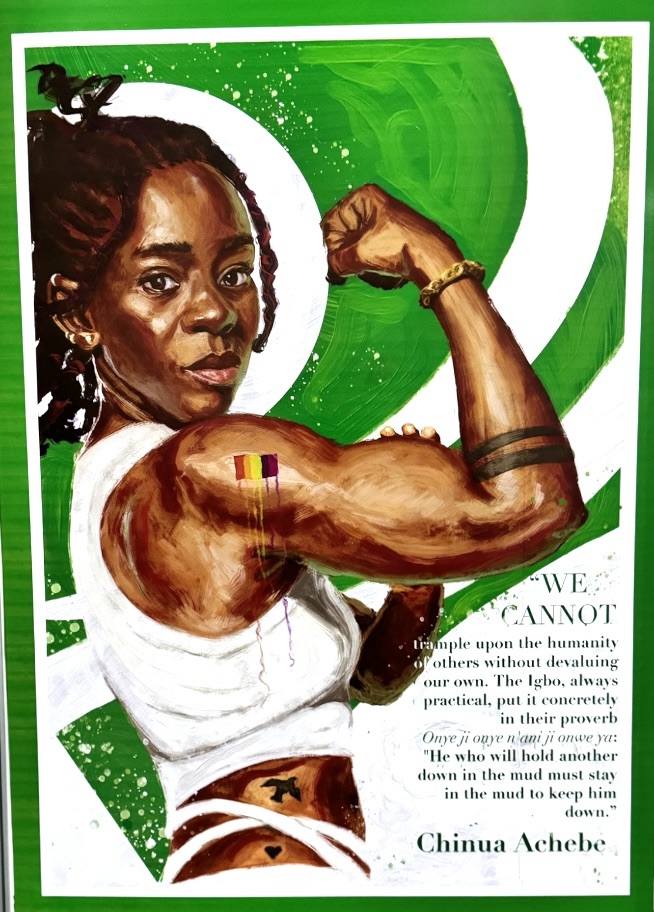
After reading your paper, I am thankful for the reminder that public health need not forget the public. Same also for community health or global health. You don’t approach any community and see one thing and not the other or address one thing and not other together with the community leading the way. I am also grateful for your focus on language and definitions many of us need to remember all ways, especially all of us who have learnt what it means to be healthy. To be public means to be whole, accessible, visible, collaborative, collective, combined, joint, and among people. To be community means to be unified, with common interests, joint ownership and participation, as if in a circle connected from end to end. To be global means to relate to, embrace all, cover all, be inclusive, exhaustive, comprehensive and universal in appeal. We ignore these definitions at are peril, devaluing ourselves too as the image below notes. We have also stayed in the mud (with our bias and privilege) for too long. No wonder health remains a thing of bias and privilege, neither a circle nor inclusive, and lacking all forms of creativity needed to make health for many whole. Since all creativity is local, I welcome the idea of all health being local, global, community, public, and in service to others.
 Writing with Juliet Iwelunmor
Leave a comment