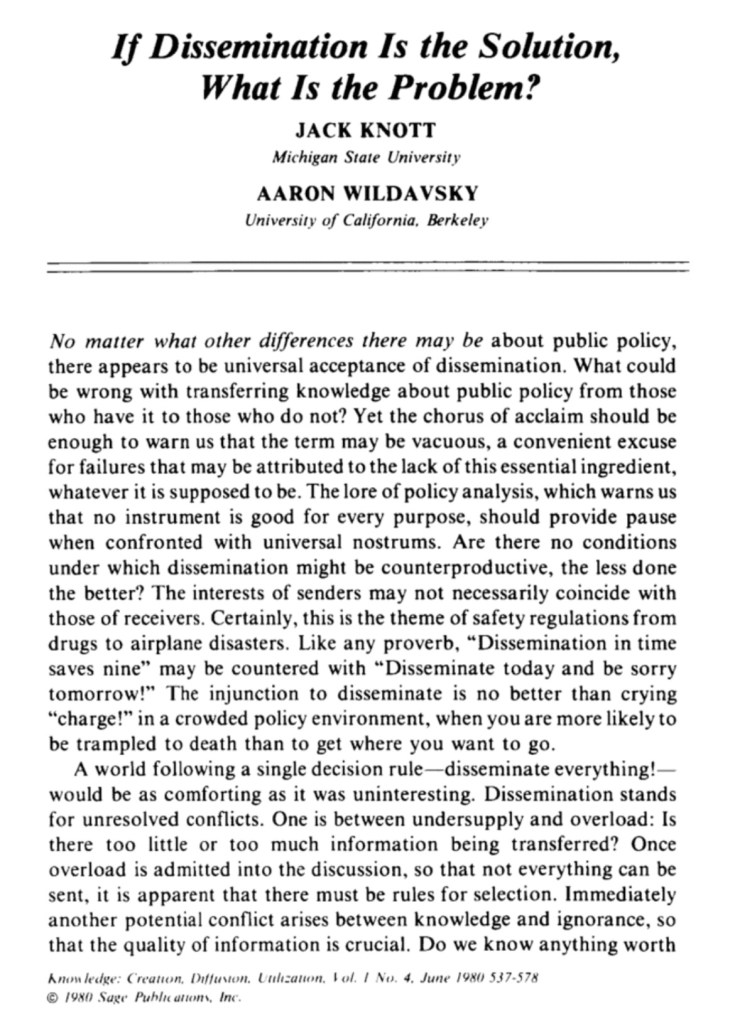
In 1980, Jack Knott and Aaron Wildavsky asked in a provactive article, “If dissemination was the solution, what is the problem?” They noted that premature dissemination in the absence of knowledge may contribute to information overload, thus resulting in underutilization. Furthermore, the issues dissemination sought to solve were not well defined resulting in blindly sharing knowledge without taken the context and characteristics of people into mind. When it comes to centering communities in dissemination, not only is underutilization common or even blind dissemination, but also censorship.
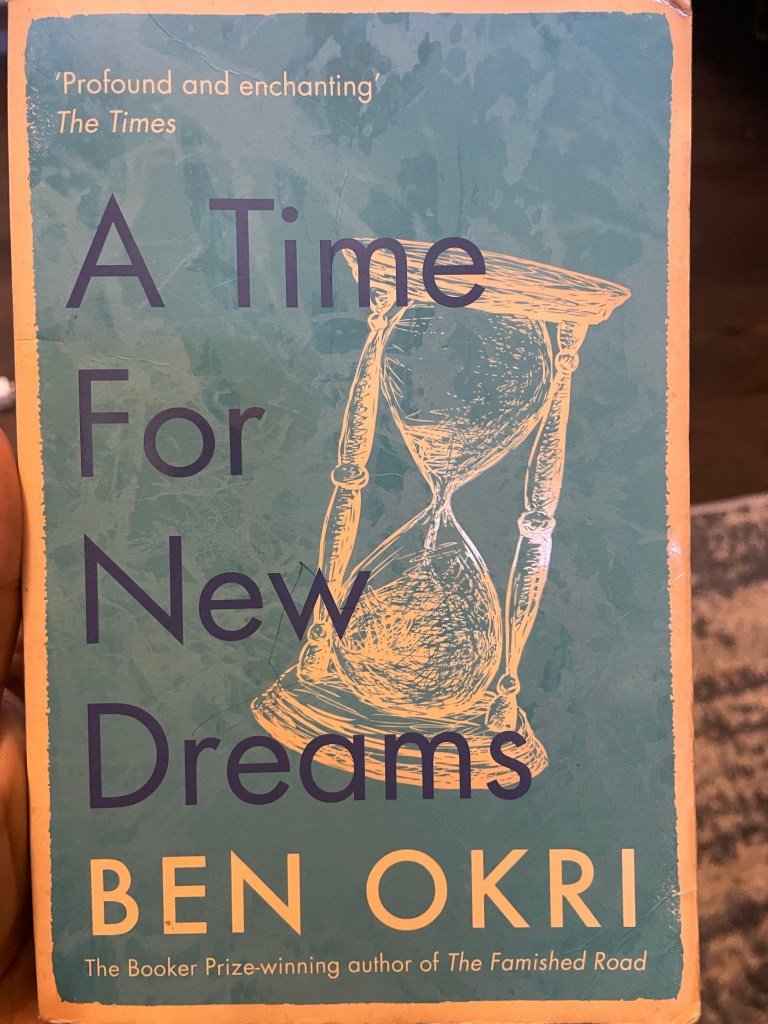
In the book “Time for New Dreams,” Ben Okri talked about self-censorship, describing it as a process where we veil our thoughts from ourselves. In many cases, we censor our true feelings, censor our struggles, censor our hurdles, censor even our success. Generations, he noted, have come and gone, and no significant creative work amongst them remains partly because of this censorship. He wondered whether people suffered, whether they dreamed, did they love or endure, were there no rage or loss, no doubts or yearning for things undefinable. He also asked whether they were perplexed about living or dying, about loving and weeping, about betrayals or forgiveness, or these days about silence or survival. Generations dared not think that which they should think. They dared not differ or step outside the box, when they should. They censored themselves, in ways that ultimately killed their creativity, living as if they didn’t live, leaving us with no sign that they were here. Yet it is only by freeing ourselves, disseminating ourselves, that we extend this freedom to others.
The fact that dissemination is a solution but often not occurring within communities, is because we censor ourselves even when engaging with communities. We stifle our struggle, close off our conversations, stay within 3000 words, that only few people will read. We forget we are humans too. We forget that we deserve to be seen, the same way communities deserve to be visible.
How can we care about disseminating to communities in meaningful way, when we censor ourselves first, when communities do not trust what we do, when we censor ourselves around them, or use tools that do not belong to them? How do we transcend our traditional and habitual modes of thought if we continue to use traditional and habitual modes of thoughts that do not belong to communities? A Mende proverb once shared by the author bell hooks, describes a thing passing in the sky, thick clouds surround the thing, but the uninitiated see nothing. You cannot center communities in dissemination if you don’t first see communities, if you don’t first see yourself, in relation to whatever communities you belong to. The same way local hospitals for example, saw and valued the work of illustrator, Cbabi Bayoc, whose art adorns their hallways. They saw him and he in turn, saw them.

Everything about the community is out in the open, always there for our probing, always there for our reflection, always there for our action. Nothing about the community is purposefully hidden. Things may change, seasons may come and go, but the community is always there. Those initiated to the community have their eyes wide open to their struggle for existence, the connections between, like when their art are used for healing, or their words used for care. The necessity of centering the community in dissemination needs to be stated over and over again, so that the uninitiated open their eyes, so that all of us become acutely and disturbingly aware, when we are censoring ourselves, when the tools we use are inadequate, our approach to dissemination have no form, or our process or visions remains the same, like generations that have come and gone, who did not see, even their own communities.
 Writing with Juliet Iwelunmor
Leave a comment